Most Stockport firms we speak to tell a version of the same story. The practice grew, software was added one tool at a time, and now the case management system, the finance package and the CRM each hold a slightly different version of the truth. Nobody planned it that way; it simply happened one sensible decision at a time.
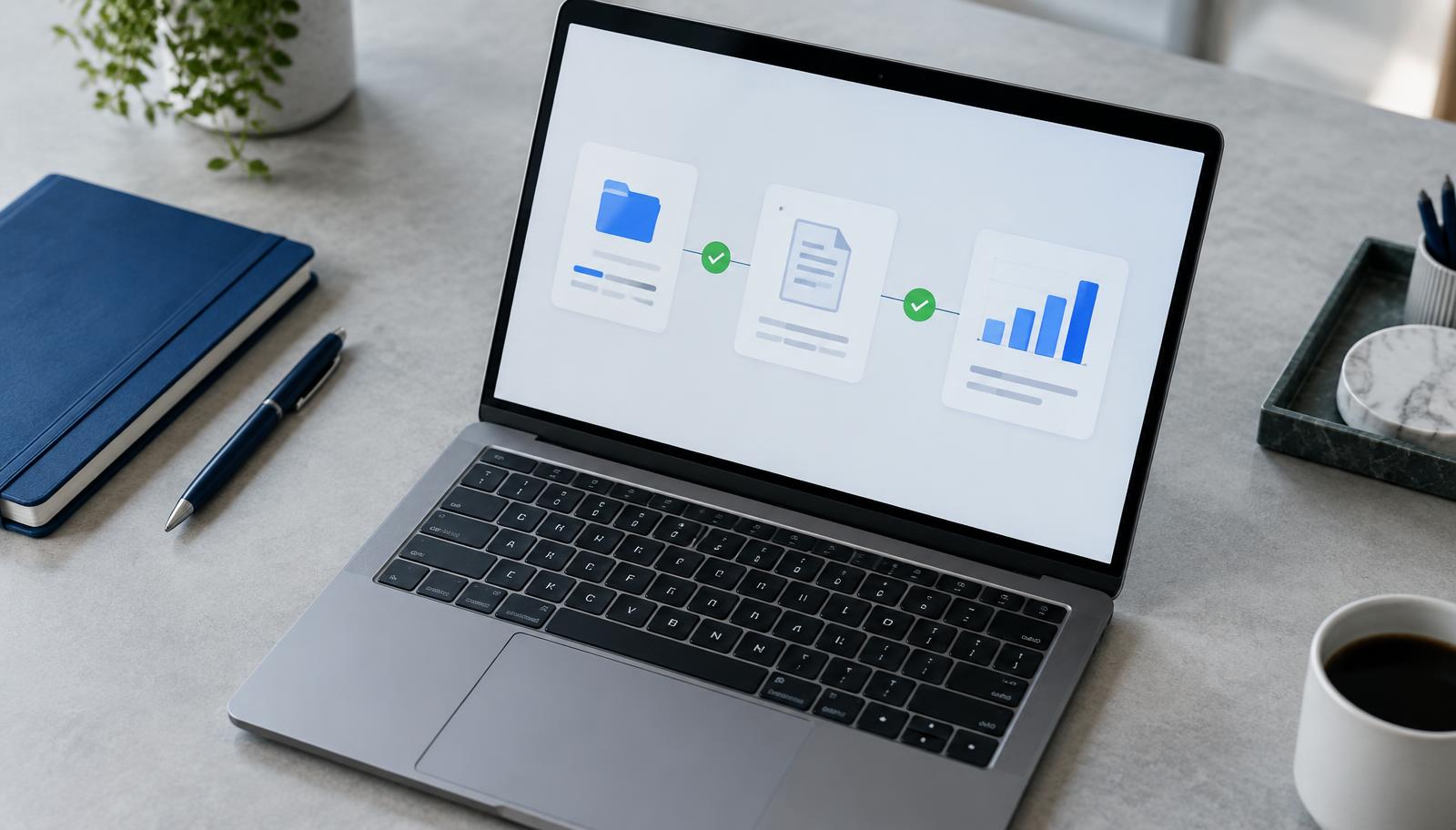
The gap between those systems gets filled by people exporting, re-keying and reconciling. We replace that manual effort with reliable, monitored software, so your systems share one accurate picture instead of three approximate ones.
Why does manual data entry slow Stockport practices down?
Manual workarounds rarely look expensive, because the cost is spread thinly across dozens of ten-minute tasks. One person spends Monday morning re-entering invoice details into the accounts package. Another exports a client list every week to cross-check compliance records. A third keeps a private spreadsheet because they do not quite trust the central figures.
For a growing firm in Stockport town centre or out towards Cheadle, the bigger cost is the ceiling it puts on growth. If every additional client means more admin, scaling means hiring people to keep spreadsheets alive. Integration breaks that link, so the practice can take on more work without the back office expanding at the same rate.
Which legal practice systems can we integrate?
Practice and case management into accounts
We link your operational database to Xero, Sage, QuickBooks or NetSuite so time records, disbursements and client invoices flow through without a human touchpoint. Payment status comes back the other way, so fee earners can see where a matter stands financially without leaving the system they already work in.
Client intake and compliance pipelines
Enquiry, identity verification and engagement details move automatically into an active, compliant file. The record is complete because the process captured it, not because somebody remembered to.
Platform migrations
Moving from a legacy case management system to modern cloud software is rarely as clean as the demo suggests. We audit the existing data, script the transformations, rehearse the cutover and fix the edge cases before you switch, so nothing is quietly lost on the way across.
Two-way sync where both systems matter
When two platforms both need to hold the same data, a one-way push is not enough. We build sync engines with conflict detection, audit logs and explicit rules about which side wins for each field.
Security, Cyber Essentials and UK GDPR
Integrations move confidential client and financial data, so security is designed in from the start. Encrypted transfer, least-privilege credentials, full audit logging of every synchronised record, maintained dependencies and UK or EU data residency are standard on every build.
If your firm holds Cyber Essentials certification, or your clients and tenders expect it of suppliers, the integration needs to sit comfortably inside the same controls: secure configuration, sensible access management and timely patching. We build with those expectations in mind, so the integration supports your certification rather than complicating it.
Working alongside your IT provider
Many Stockport firms already have managed IT covering laptops, networks and Microsoft 365. We do not replace that. We work with your provider, agree who owns which credentials and access, and document everything so the integration is easy to audit, support and hand over. The aim is one clear picture of what connects to what, rather than another mystery box nobody wants to touch.
How a project runs, and who does what
Discovery comes first. We sit with the people who do the manual work today, watch what they actually do, and write down the rules nobody has ever recorded. That conversation usually surfaces a few exceptions that would have broken the integration in month two, and we would much rather find them in week one.
On your side, we ask for one nominated project or operations lead who can make decisions and open doors internally. After discovery you get a fixed price. We then build, rehearse against copies of your real data, and go live with monitoring switched on from the first record.
Support that keeps it running
Integrations are not a one-off job. APIs change, vendors push updates and unexpected cases appear. Everything we ship comes with monitoring, alerting and a fixed monthly support arrangement, so somebody is watching when things wobble and fixing them before your team notices. You also get a clear view of what is running, what has failed and what was fixed.
If your firm is being held back by systems that do not talk to each other, send a short note through the contact form. We will come back within one working day with an honest view of the size of the job and what it would cost to make the problem go away. You can also read about our integration service or our data recovery work.