Firms and professional practices across Altrincham, Sale, Stretford and the rest of Trafford handle a steady flow of client matters, compliance checkpoints and billing milestones. Most of that flow is well understood by the people doing it. The problem is that the software rarely understands it in the same way.
When the onboarding process, the matter tracking system and the accounts package each sit in their own silo, the gaps get filled by hand. Addresses get re-keyed. Fee notes get copied. Someone chases a missing reference number that exists perfectly well — just in the other system. None of it is difficult work, which is exactly why it quietly absorbs so many hours.
How can integration reduce admin for Trafford legal firms?
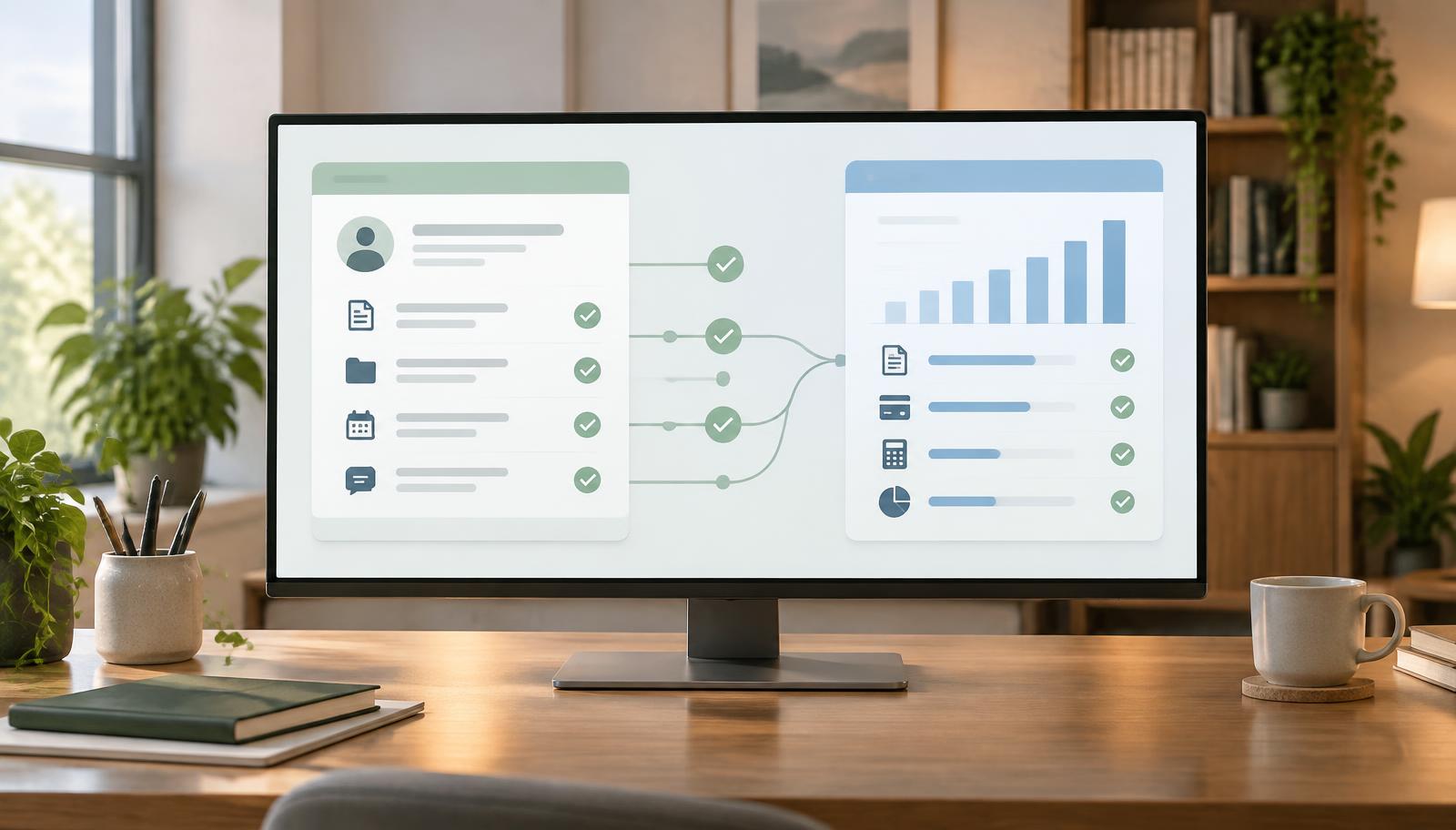
Client onboarding through to an active file
New instructions and compliance details pass straight into your practice system rather than being typed twice. The record is complete from the start, which matters as much for your audit trail as it does for the time saved.
Matter progress through to accounts
Completed work, disbursements and milestones trigger the right billing records automatically. Nobody has to remember to tell the accounts team that a matter has moved on, and nothing sits unbilled because it fell between two systems.
Reporting your partners can trust
When the underlying data agrees, a practice manager can open one dashboard and see current matters, work in progress and billing health without reconciling three spreadsheets first. That is usually the point at which people stop keeping their own private versions of the numbers.
How a typical project runs
We start with discovery: a focused look at how work really moves through your firm, and where the manual handovers sit. Process documents are a useful starting point, but the valuable detail is almost always in the exceptions — the client type that gets handled differently, the fee arrangement that does not fit the standard template.
Once we understand that, we agree the rules and give you a fixed price. We build against a safe test environment using copies of your real data, rehearse the switch-over, and go live with monitoring running from the first record. Fixed monthly support then keeps the whole thing healthy as platforms change around it.
Why work with a Greater Manchester specialist
Integration projects succeed or fail on detail: the real-world exceptions, the compliance rules and the edge cases that off-the-shelf connectors quietly skip. Working with a small team based just up the road in Bolton means you talk directly to the people writing the software, not to an account manager relaying messages.
It also means straightforward communication. We will tell you when something is simpler than you feared, and we will tell you when a piece of work is not worth doing yet. Neither answer costs you anything to hear.
Security and confidentiality
Client confidentiality is not negotiable in professional services, so we build with that assumption from the first line of code. Least-privilege credentials, encrypted transfer, full audit logs and UK or EU data residency are standard on every project, not optional extras. If your firm holds Cyber Essentials, or your clients expect it of your suppliers, the integration is designed to fit inside those controls.
Where you already have an IT provider handling devices, networks and email, we work alongside them rather than over the top. Responsibilities and access are agreed up front and documented, so nobody is guessing later.
Talk to us
If your systems are not keeping up with your caseload, send a short note through the contact form. We will come back within one working day with an honest view of the job and what it involves. You can also read about our wider integration work or our Power BI reporting for firms that want the data in front of them once it is joined up.