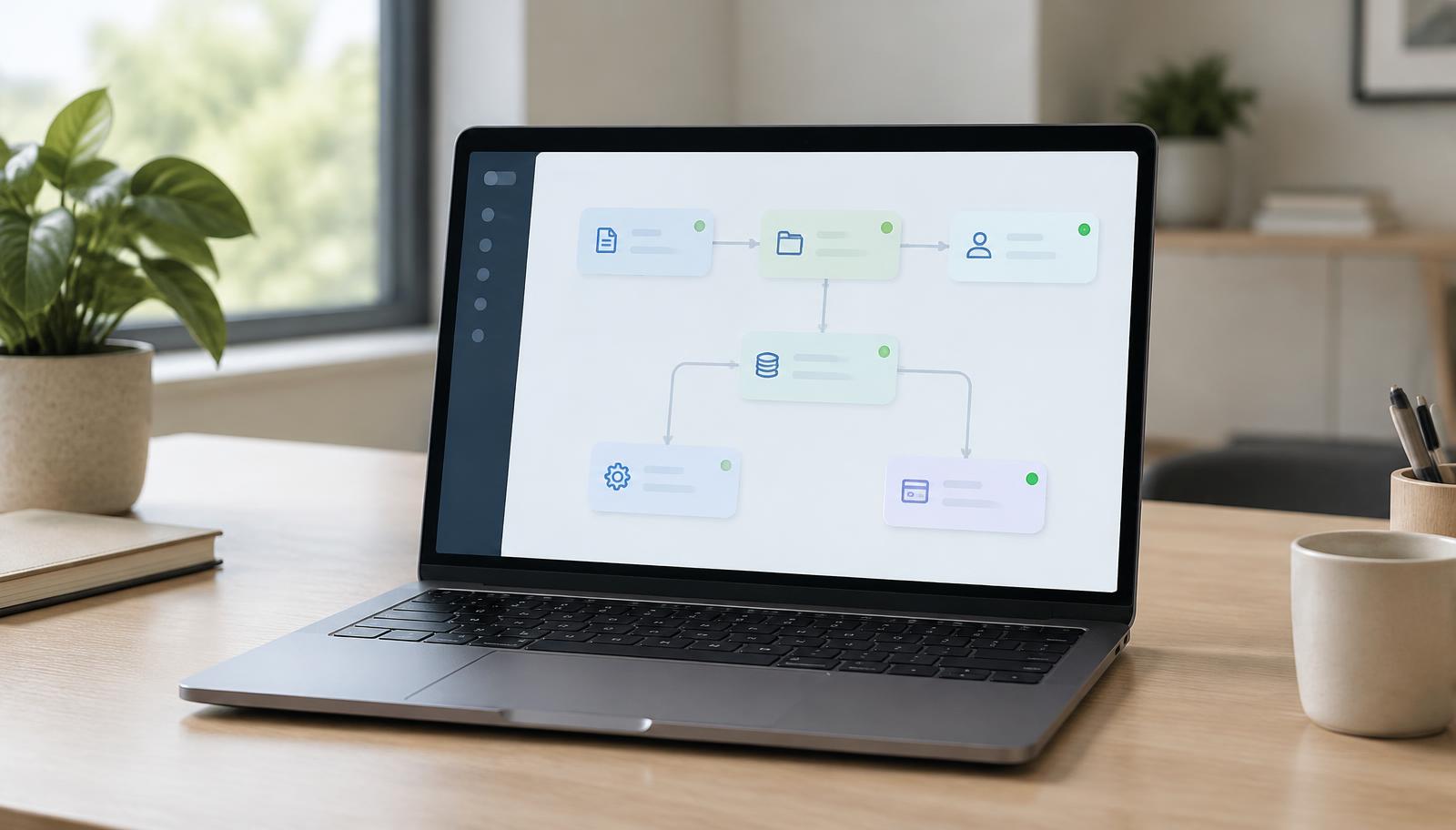
When case details, client records and financial information sit in different systems, keeping them consistent becomes a job in its own right. Staff copy information between platforms, check whether records match, or lean on spreadsheets to fill the gaps.
In short, a system integration lets your software share agreed information automatically, so details are entered once and stay consistent everywhere they're needed.
When do separate systems create extra work for Rochdale firms?
A firm might use one platform for case information, another for billing and a separate tool for client communications or reporting. If those systems don't share information, people enter the same details more than once and check records by hand. That takes time and makes mistakes more likely. An integration transfers specified information between systems, with clear rules about which system owns each field and what happens when records conflict.
Integration doesn't mean replacing the software you already use. If your current systems meet your needs, connecting them is often more practical than moving to a new platform.
Which systems can be connected?
The scope depends on your software and the information you need to share. Common examples include:
- Case management systems and finance or billing software
- CRM platforms and document management systems
- Client and matter records used in reporting
- Financial data shared between accounts systems and internal reports
- Spreadsheets or databases that support existing processes
We review the systems involved, the fields that need to transfer and any access restrictions before confirming the proposed integration.
How does an integration project work?
1. Discovery
We review your systems, the information involved and how your team uses them day to day.
2. Scope and plan
You get a fixed price and a document setting out what will transfer, how often, and how errors or conflicting records will be handled.
3. Build and testing
We build the connection and test it against copies or test data wherever possible.
4. Launch and monitoring
We put the integration live, monitor it, and can provide ongoing support if you need it.
How do you keep our data secure?
Integrations should only access the information and functions they need. We consider permissions, data handling and error reporting as part of every project, and test the transfer process before launch. All data is hosted within the UK or EU on infrastructure we control, and our work follows UK GDPR.
Talk to us about your systems
Tell us which systems are involved and what you need them to share through the contact form. We'll reply within one working day with an honest view of the work. You can also read about our wider integration service, see how we help firms in Bolton and Oldham, or find out why integrations fail.